“Show me a cycle,” they say.
“A spin bike?” we ask.
“No, something less intense.”
“An upright, then?”
“Yes, but with back support too.”
“Ah. You mean a recumbent bike.”
Ask our sales staff if they’ve had this exact conversation before and they’ll just smile and walk away, muttering ‘all the time’.
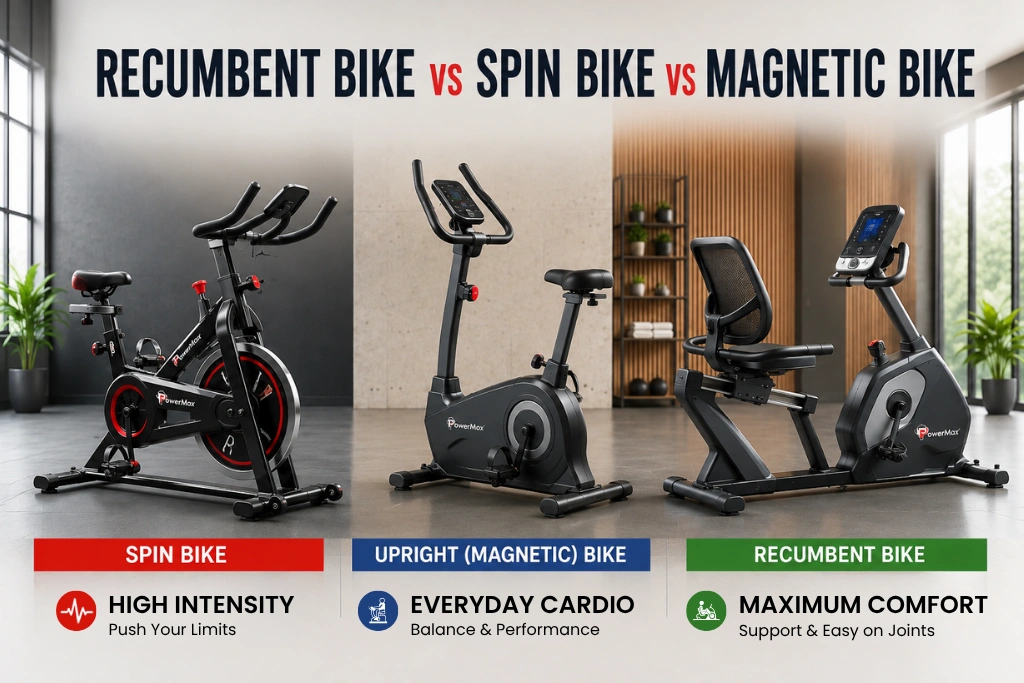
We’re not poking fun at anyone’s knowledge here. Most of us were confused by the same thing at some point, and it’s a fair confusion to have. Recumbent bikes, spin bikes, and “magnetic bikes” all sit under one umbrella: exercise bikes. But all three serve a different purpose, get picked by people chasing different goals, and each one gives you something the others don’t.
Today we break down what actually separates these three, who each one is for, and how to land on the right one instead of second-guessing it after it’s in your house. Let’s start with the one most people picture first.
Magnetic Resistance on Exercise Bikes: What You Need to Know
Magnetic isn’t a type of bike. It’s a type of resistance. A spin bike, an upright, and a recumbent can all run on magnetic resistance, which uses magnets sitting close to the flywheel to control how hard you pedal, with no friction pad wearing out and almost no noise. So, when someone asks us for a “magnetic bike,” our real question back is simple: magnetic what? Spin, upright, or recumbent? That is the choice that decides how the bike actually feels under you. Nearly everything we sell above the entry level is magnetic now, so for most buyers the real decision comes down to body type, which is what the rest of this is about.
Spin Bikes
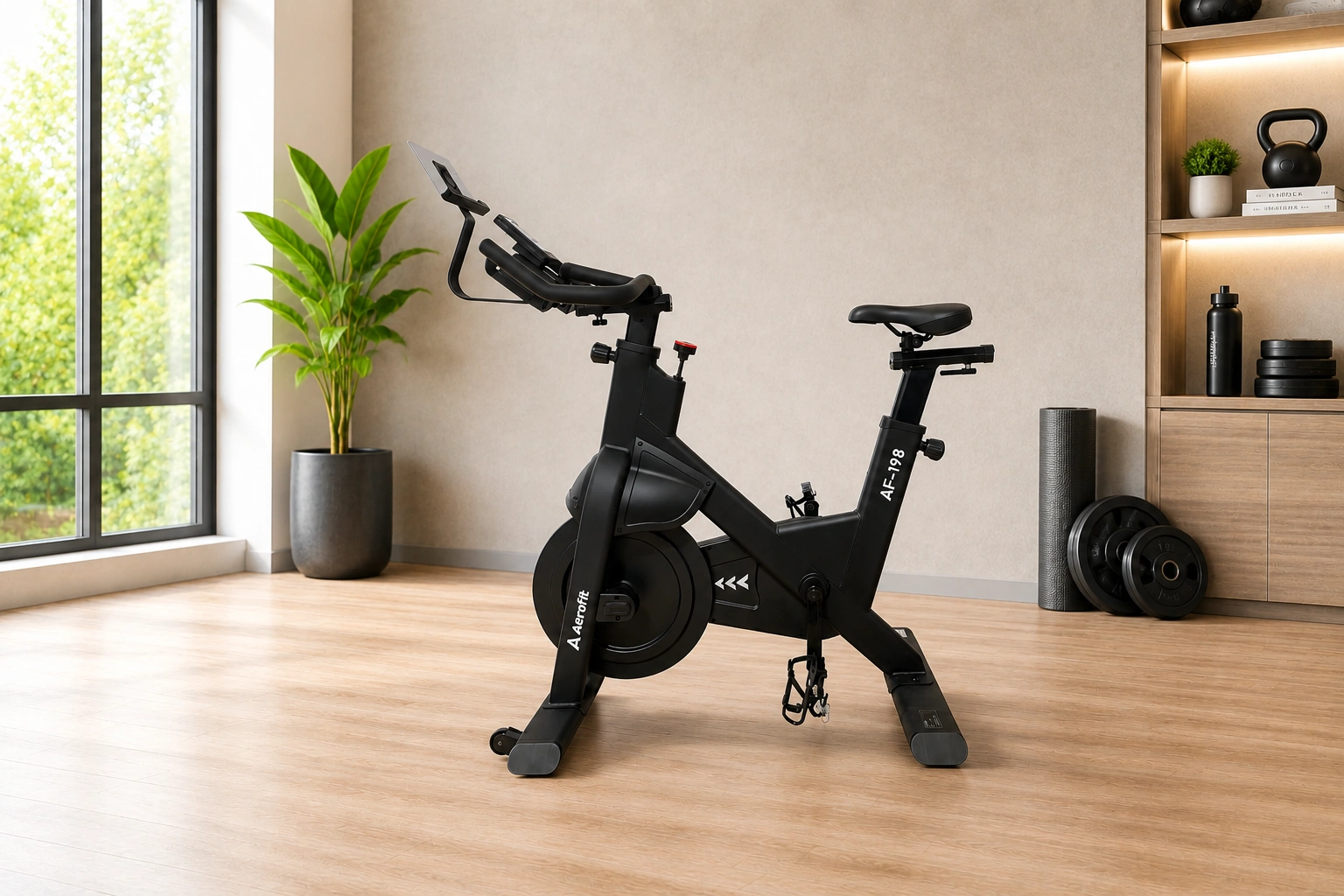
A spin bike is as close to real cycling as you get indoors. You lean forward over the handlebars, the pedals sit right below you, and a heavy flywheel up front carries your momentum through every stroke, same as a road bike does on tarmac. That weight is what lets you stand up out of the seat and drive through a climb instead of just spinning your legs.
This is a bike built for effort. Short hard intervals, sprints, standing climbs, the sort of session that leaves you soaked and breathing hard by the ten-minute mark. It rewards people who already have some fitness and want to push it further, and it’s why spin bikes fill boutique studios and HIIT classes. What it won’t give you is a gentle, sit-back-and-read ride. The forward lean and the narrow saddle both ask something of you from the first minute, which is exactly what the next two bikes on this list soften.
Best for: high-intensity intervals, standing climbs, cyclists training in the off-season, anyone who wants a hard, sweaty workout in a compact frame.
Recumbent Bikes
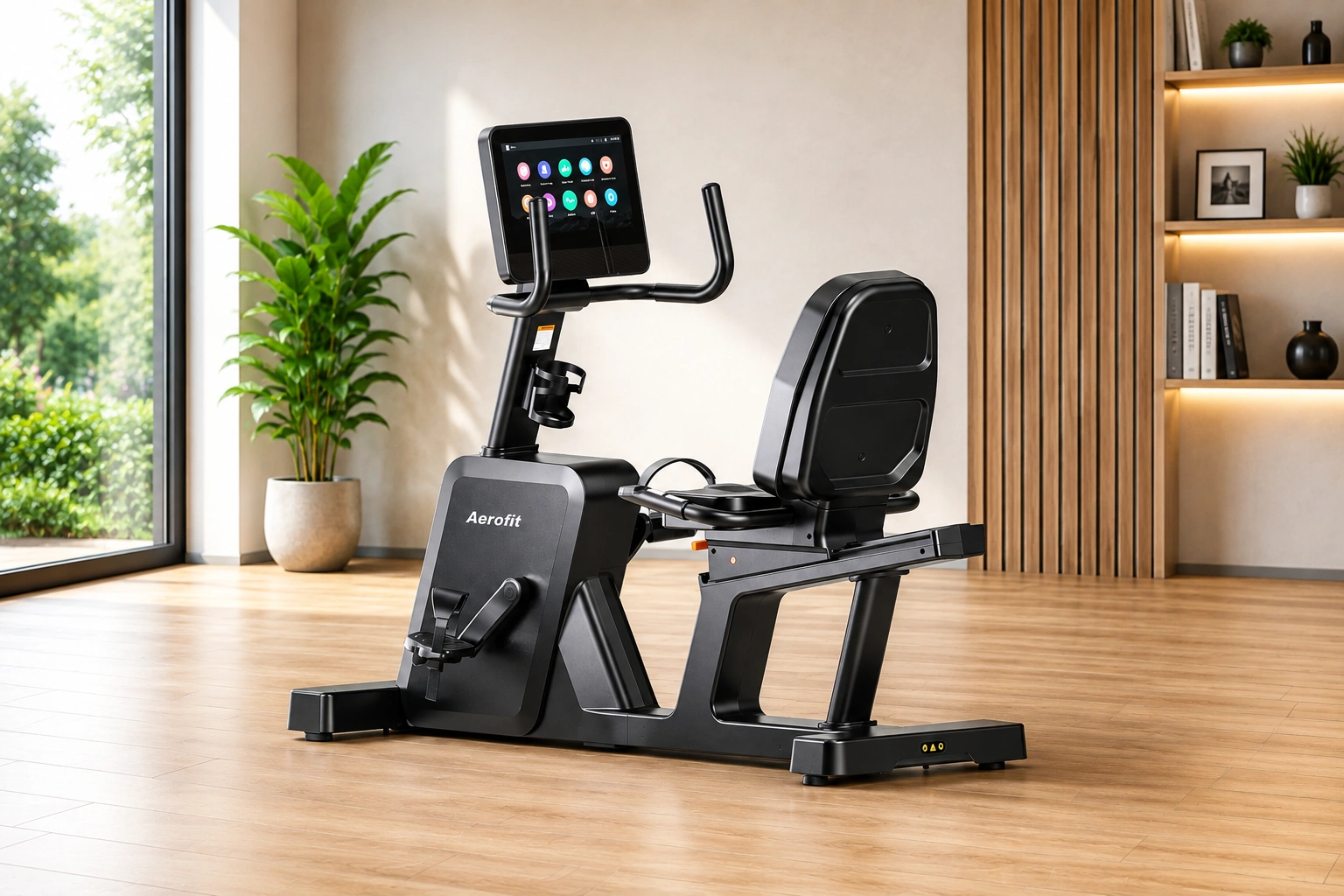
From the high-intensity, gruelling sessions on a spin bike to a full backrest with the pedals out in front instead of underneath, and a low step-through frame you can get on and off without a second thought, recumbent bikes are the answer for anyone chasing their cardio goals with comfort kept firmly in mind.
For anyone managing a bad lower back, healing from a hip or knee surgery, or simply older and wary of a narrow saddle, ease of entry alone can decide whether a machine gets used daily or becomes a coat rack within a month.
The reclined position spreads your weight across the seat and backrest instead of putting it all on a small saddle, which is why recumbent bikes show up so often in physiotherapy. It is often said that low-impact exercise like recumbent cycling can improve heart health and joint mobility in older adults dealing with hip and knee pain, without loading the spine like an upright position does. You won’t get standing climbs here. What you get is a bike you can ride for forty-five minutes with a book propped on the console, heart rate in an easy fat-burning range, almost no chance of the session ending in back pain.
Best for: lower back and joint issues, post-surgery recovery, older riders, long steady sessions, anyone who wants comfort over intensity.
Upright Bikes
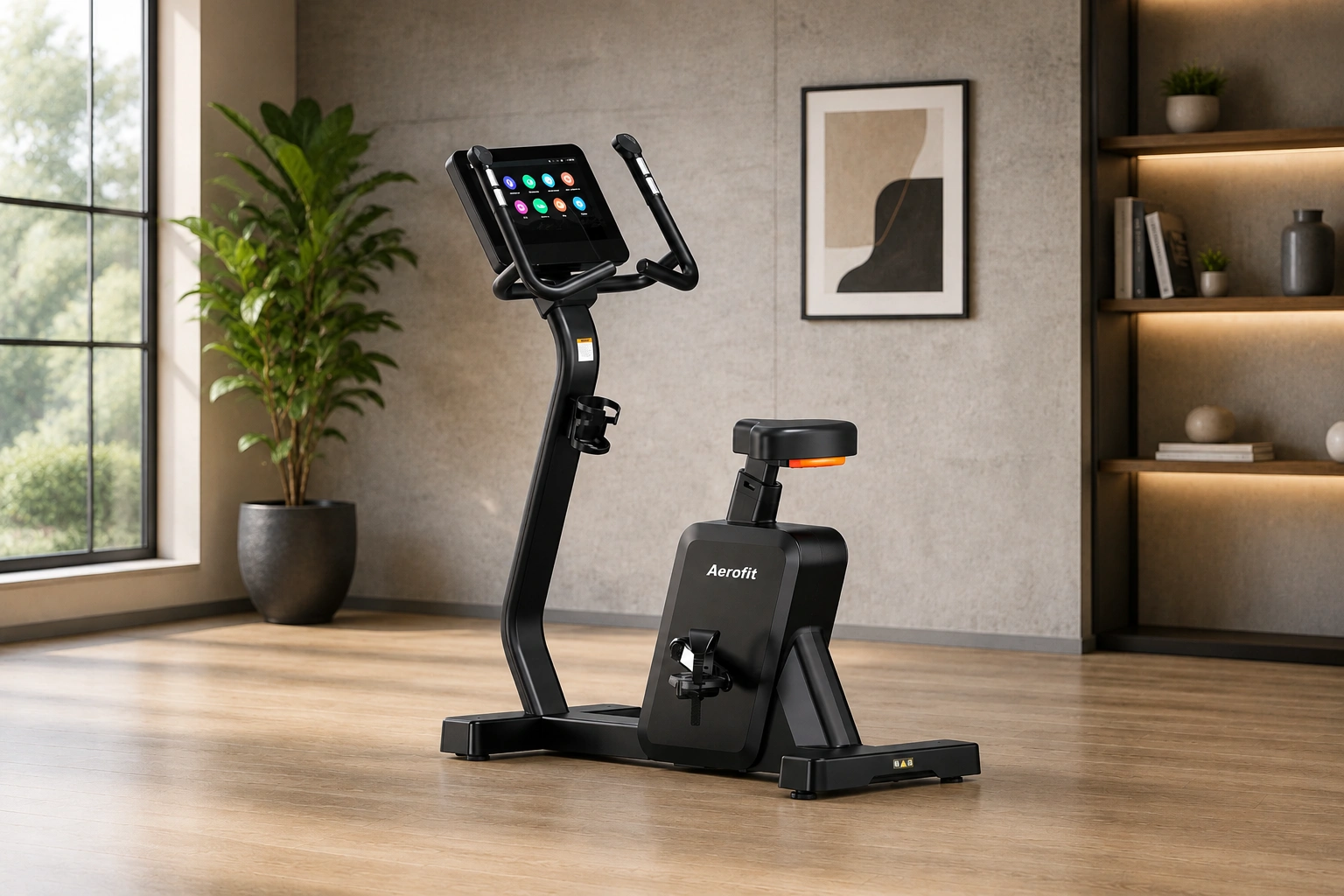
You give a little to get a little. That’s the trade with an upright bike, and it’s a fair one. It pulls back some of the spin bike’s intensity and hands you a bit more comfort in return, without going all the way to a recumbent.
Upright bikes sit between the two. Less aggressive than a spin bike’s forward lean, no backrest like a recumbent, pedals below you rather than out front. They suit someone who wants a more athletic, calorie-burning position without committing to a full spin setup, and they take up less floor space than either. If you’re training to hold form for outdoor rides, or you want short, hard intervals, the spin bike is the more specific tool. If you just want a solid daily session in a compact frame, an upright does that fine, and it asks less of your core and shoulders.
Most upright bikes today, including nearly everything we stock, run on magnetic resistance, so they stay quiet and need almost no upkeep. That matters if you train early in the morning in a flat with thin walls or a light sleeper in the next room. The compact footprint is the other quiet advantage. An upright stands tall rather than long, so it slots into a corner or onto a balcony far more easily than a recumbent, and most home models roll out of the way on their transport wheels without you having to call for help. For a lot of Indian homes short on space, that alone settles the decision.
Best for: everyday cardio at moderate intensity, small homes and balconies, riders who want more than a gentle ride but less than a full spin session, quiet magnetic operation.
What These Bikes Cost in India Right Now
Prices move with festive sales and flywheel weight, so treat these as current ballpark figures from our own listings, not fixed numbers.
Spin bikes are the most affordable way in. Home models start around ₹21,000 and run into the ₹30,000 to ₹45,000 range for sturdier builds, with commercial-grade machines reaching close to ₹93,000.
Upright bikes start at a similar point, from about ₹21,000 for a domestic magnetic model, with semi-commercial builds around ₹35,000. Full commercial upright bikes built for gyms climb a long way past that, from ₹58,000 to well over ₹2 lakh for a top-end model with a TFT console, essentially a colour touchscreen display.
Recumbent bikes ask a little more at entry, starting around ₹25,500 for a home model and sitting in the ₹44,000 to ₹52,000 band for better cushioning and a wider workout range. Commercial recumbent bikes, the self-powered and TFT versions, run up to roughly ₹2.4 lakh.
Wrapping Up!
If we had to point at one bike and call it the best, that wouldn’t just be a lazy answer, it’d be a wrong one. There isn’t a single best exercise bike. There’s only the best one for what you want.
If you enjoy high-intensity workouts, the sort where you step off after thirty minutes dripping with sweat and properly spent, go for a spin bike and don’t think twice.
If you want something easy on your knees, that supports your back through every stroke and lets you train long and steady without paying for it the next morning, a recumbent bike is your pick.
And if you want the middle path, some of that athletic feel without the full spin bike commitment, in a frame that won’t eat your room, the upright bike is the one to look at.
There’s no wrong answer here. As long as you’re on the bike and pedalling, you’ve already made the right call. The only trick to choosing between the three is to ask yourself one question first: what do you actually want out of it? Answer that honestly and the right bike more or less picks itself.
Still Not Sure? Come Sit on One
The truth is, a five-minute test ride tells you more than any spec sheet. We stock all three body types across commercial, semi-commercial, and domestic grades, in both magnetic and friction resistance, from brands top brand. We ship anywhere in India, so distance from Chandigarh is never really the problem. And if you’d rather sit on both before deciding, come by either of our stores, one in Sector 7-C, Chandigarh, and the other in Zirakpur, and take your time. No pressure to buy on the spot. We’d just rather you end up on the right bike than the one that looked good online.